


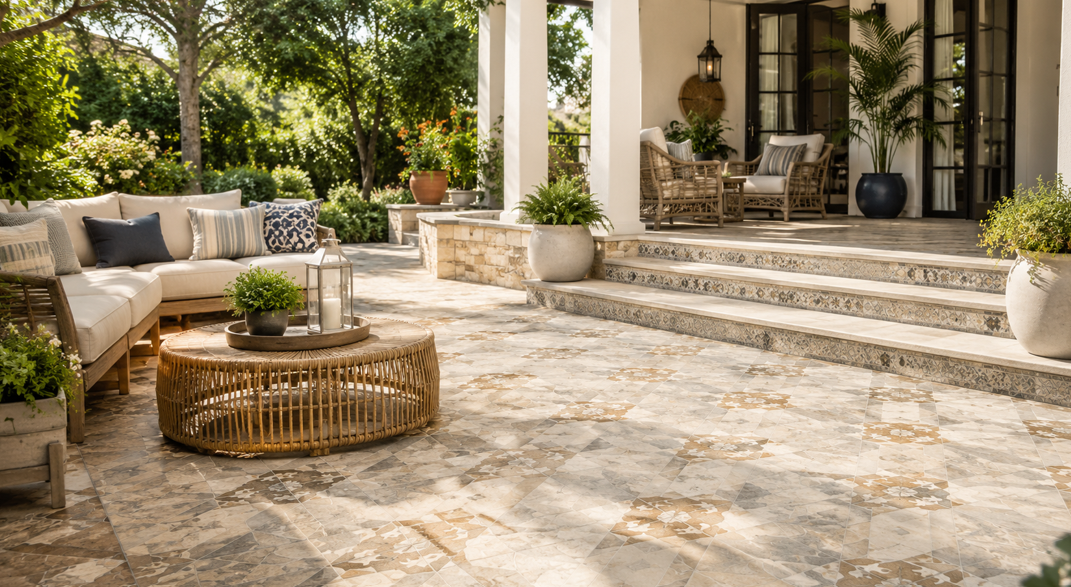
Summer in Sheboygan brings more time outdoors, whether that means morning coffee on the porch, family dinners on the patio, or relaxed evenings with friends. A well-designed outdoor floor helps those spaces feel connected to the home rather than treated like an afterthought.
Tile can create a polished, durable surface with a wide range of colors, shapes, and patterns. The key is choosing a product designed for exterior use and pairing it with proper preparation, drainage, and installation. Wisconsin weather brings heat, rain, snow, freezing temperatures, and repeated freeze-thaw cycles, so an outdoor tile project needs more than a good-looking sample.
At Sheboygan Flooring and Furniture, homeowners can explore flooring options with guidance from a family-owned local team that understands how materials need to perform in Sheboygan-area homes. This guide covers the design possibilities, practical material choices, and planning details that can help a tiled patio or porch look beautiful through summer and beyond.
Why Tile Works So Well in Outdoor Living Areas
Tile offers a combination of style and everyday practicality that suits many covered porches, patios, sunrooms, and outdoor transition areas. It can create the look of stone, concrete, wood, or patterned cement while giving homeowners a more consistent surface than many natural materials.
One of tile’s biggest advantages is design flexibility. A homeowner can choose a quiet neutral backdrop for furniture and planters, a bold pattern for a small porch, or a stone-inspired finish that blends naturally with the yard. Different shapes and layouts can also change how large or intimate the space feels.
Outdoor tile can provide several useful benefits:
A finished surface that visually extends the home
Easy coordination with siding, brick, stone, and landscaping
A broad range of colors, textures, and formats
A surface that can be swept and cleaned as needed
Clear definition for dining, seating, and grilling zones
Long-lasting style when the product and installation suit the conditions
Not every tile belongs outdoors. Indoor wall tile, highly absorbent products, and very smooth finishes may not perform well in exposed spaces. Product specifications matter, especially water absorption, frost resistance, surface texture, and intended application.
The design decision starts with appearance, but performance needs to lead the final selection.
Start With the Type of Outdoor Space
A covered porch and an open patio do not face the same conditions. Before choosing a tile, look at how much water, sunlight, snow, and temperature change the surface will experience.
Covered Porches
A roof reduces direct rain and snow, but moisture can still blow into the space. Covered porches may also experience condensation, tracked-in water, and freezing temperatures.
Because the area is partly protected, homeowners often have more design freedom than they would on a fully exposed patio. Even so, the tile still needs to be approved for exterior use when the porch is unconditioned.
A textured stone look, subtle pattern, or warm neutral can make a porch feel welcoming without competing with outdoor furniture and architectural details.
Open Patios
Open patios receive direct rain, snow, sunlight, and debris. Drainage becomes especially important because standing water can increase slip concerns and create problems when temperatures drop.
A patio tile benefits from:
Exterior-use approval
Low water absorption
Frost resistance
A slip-conscious surface
Proper slope and drainage
Installation materials rated for outdoor conditions
Large-format tile can create a clean, contemporary appearance, while smaller formats can work well in compact areas or spaces with more slope changes. The best size depends on the layout, substrate, drainage plan, and installation approach.
Three-Season Rooms and Enclosed Porches
An enclosed porch may look like an indoor room, but an unheated space can still experience substantial temperature swings. Tile selection needs to reflect whether the room is fully climate-controlled.
A wood-look porcelain tile can make a three-season room feel warm and connected to the interior while offering a surface suited to changing conditions. Patterned tile can also add personality where furniture and wall décor are minimal.
Entry Landings and Transitional Areas
Small tiled landings can create a polished connection between indoor and outdoor spaces. These areas often see wet shoes, salt, grit, and frequent traffic, so texture and cleanability matter.
A compact landing is also a good place to use a stronger pattern or contrasting border because the design will not overwhelm a large area.
Choose Tile Made for Wisconsin Weather
Outdoor tile in Wisconsin needs to handle more than summer use. Moisture that enters a porous material can expand when it freezes, which may contribute to cracking, surface damage, or bond failure.
Porcelain Tile
Porcelain tile is often a strong candidate for exterior applications because it is dense and generally has low water absorption. Many porcelain collections are available in stone, concrete, wood, and textured finishes.
However, the word “porcelain” alone does not confirm that a product suits every outdoor project. Homeowners can look for manufacturer guidance covering exterior use, freezing conditions, and the intended installation location.
Porcelain is available in many formats, including large rectangular planks, square tiles, pavers, and mosaics. This makes it easier to coordinate an outdoor area with the style of the home.
Ceramic Tile
Ceramic tile can be attractive and practical indoors, but many ceramic products are more absorbent than porcelain and are not rated for freezing exterior conditions. Some specialized products may be suitable for certain covered or climate-controlled spaces, but the product specifications need to confirm that use.
Rather than choosing by label alone, compare the manufacturer’s application guidance and performance details.
Natural Stone Tile
Natural stone can create a timeless outdoor appearance, but each stone type performs differently. Some materials are more porous, some need sealing, and some may be sensitive to freeze-thaw conditions or deicing products.
Stone also varies from piece to piece. That variation can be beautiful, though it benefits from careful planning and realistic expectations. Professional guidance helps determine whether a particular stone fits the location, climate exposure, and maintenance preferences.
Outdoor Porcelain Pavers
Thicker porcelain pavers can offer a substantial appearance for patios and walkways. Depending on the product and project, they may be installed over a prepared base, pedestal system, or bonded substrate.
These systems involve specific preparation and installation requirements. The product manufacturer and installer can confirm which method works for the site.
Surface Texture and Slip Awareness Matter
An outdoor floor regularly encounters water from rain, sprinklers, wet shoes, and cleaning. A glossy or highly polished tile may look elegant in a showroom but feel less practical on an exposed porch or patio.
Look for a surface with enough texture to support confident movement while remaining comfortable and manageable to clean. Very deep texture may trap more dirt, while an overly smooth finish can feel slick when wet.
Slip performance depends on more than the tile itself. Footwear, slope, water, ice, leaves, grout joints, and maintenance all affect how the surface feels.
Useful questions to ask include:
Is the tile approved for exterior floor use?
Is it intended for wet areas?
How does the finish feel underfoot?
Will the space be covered or exposed?
How much snow and water will reach it?
Is the surface comfortable for bare feet?
How easy is the texture to sweep and clean?
No outdoor surface is completely slip-proof. Thoughtful product selection, drainage, lighting, handrails where appropriate, and routine maintenance all contribute to safer use.
Design Ideas for Summer Patios and Porches
Outdoor tile can support many different looks, from quiet and natural to colorful and expressive. Homeowners can explore tile flooring to compare styles, formats, and finishes before narrowing the options for an exterior project.
Stone-Look Tile for a Relaxed Patio
Stone-inspired tile works well with gardens, brick, wood furniture, and natural landscaping. Beige, taupe, warm gray, and mixed mineral tones can soften the transition between the house and yard.
For a calm look, use one main tile throughout the patio and let furniture, cushions, and planters add color. A subtle variation between tiles can make the floor feel more natural without becoming visually busy.
Wood-Look Tile for a Welcoming Porch
Wood-look tile can bring warmth to a porch while offering the appearance of planks. It pairs well with painted railings, wicker furniture, and traditional home styles.
Choose a tone that complements the home’s exterior rather than trying to match every wood element exactly. A medium oak, weathered brown, or soft driftwood color can create contrast while still feeling coordinated.
Plank direction also affects the visual result. Running planks along the length of a narrow porch can emphasize its shape, while a different orientation may make a compact space feel wider.
Concrete-Look Tile for Modern Outdoor Rooms
Concrete-inspired tile creates a clean backdrop for modern furniture, black metal details, simple planters, and structured landscaping. It can work especially well in larger formats with restrained grout lines.
Warm gray or greige often feels more inviting than a very cool industrial gray. The right undertone depends on the siding, masonry, doors, and nearby interior flooring.
Patterned Tile for Small Porches
A small front porch or covered landing can handle more visual energy than a large patio. Geometric, encaustic-inspired, or decorative patterns can create a memorable entrance without requiring extra décor.
Keep surrounding elements simple so the floor remains the feature. A patterned field with a solid border can also make the design feel intentional and framed.
Borders and Inset Designs
A border can define the edge of a patio or highlight a seating area. An inset pattern can create the look of an outdoor rug without adding a movable textile.
For example, a dining zone may use the main tile around the perimeter with a contrasting pattern beneath the table. These layouts need accurate planning so cuts, grout lines, and furniture placement align well.
Indoor-Outdoor Coordination
Using related colors or styles indoors and outdoors can make the home feel more connected. The products do not need to be identical. A wood-look tile outdoors may coordinate with hardwood indoors, or a stone-look patio may pick up colors from an interior fireplace.
The goal is a visual relationship, not a perfect match.
Plan the Layout Around How the Space Is Used
A beautiful layout also needs to support movement, furniture, and drainage.
Start by identifying the main activity zones:
Dining
Conversation seating
Grilling
Plant displays
Entry and exit paths
Steps and transitions
Storage
Large-format tile can make a generous patio feel calm and open. Smaller tiles or patterns can add detail to a compact porch. The shape of the area also influences the layout. Long plank-style tile may emphasize length, while square formats can create a more balanced grid.
Before installation, review where cut tiles will fall. Very narrow pieces along a visible edge can look unplanned. Centering the layout or adjusting the starting point may create more balanced cuts.
Grout color changes the overall effect. A close match creates a more continuous appearance, while contrast highlights the pattern. Outdoors, homeowners may also prefer a grout color that does not show every bit of soil or tracked-in debris.
Preparation and Installation Protect the Design
Even the best outdoor tile can disappoint when the surface beneath it is unstable, poorly drained, or unsuitable for the installation method.
A professional assessment can identify concerns such as:
Cracks in an existing concrete slab
Insufficient slope
Standing water
Movement at transitions
Deteriorated surfaces
Improper height near doors
Weak or uneven substrates
Missing expansion or movement accommodation
Outdoor surfaces generally need to direct water away from the home. Tile does not correct an underlying drainage problem by itself.
Temperature changes also cause materials to expand and contract. Appropriate movement joints and exterior-rated installation products help the assembly respond to those changes. The exact system depends on the tile, substrate, exposure, and manufacturer requirements.
Homeowners may enjoy selecting the pattern and color, but substrate preparation is where long-term performance begins. This is one area where experienced installation and product-specific guidance provide real value.
Keep an Outdoor Tile Surface Looking Its Best
Outdoor tile care can be simple when it is handled regularly.
Sweep away leaves, grit, and soil before debris collects in textured areas or grout joints. Rinse or clean the surface using products approved for the tile and grout. Avoid harsh tools or chemicals that could damage the finish, grout, sealant, or nearby landscaping.
During winter, remove snow with tools that are suitable for the surface. Metal edges can scratch some finishes. Deicing products also vary, and some may affect grout, stone, concrete, or surrounding materials. Follow the tile and installation manufacturer’s care guidance.
Inspect the area periodically for loose grout, cracked sealant, drainage concerns, or movement. Early attention can help prevent a small issue from affecting a larger section.
Natural stone may need periodic sealing depending on the material and installation. Porcelain generally has different maintenance needs, though grout and movement joints still benefit from routine inspection.
Create an Outdoor Space That Feels Connected to Home
A tiled patio or porch can become one of the most enjoyable parts of a Sheboygan home. It can define a dining area, make a front entrance more welcoming, or turn an underused porch into a comfortable summer retreat.
Successful outdoor tile design balances appearance with climate performance. Start with a product approved for the location, consider water absorption and frost resistance, choose a practical surface texture, and plan for drainage and temperature movement. Then bring in the design details that make the space personal, whether that means a stone look, wood-inspired planks, a modern concrete finish, or a patterned porch.
The result can feel polished without becoming formal and stylish without losing everyday practicality. Good planning also makes it easier to coordinate furniture, lighting, planters, and the surrounding landscape.
Ready to explore exterior tile options for a porch, patio, landing, or three-season room? Reach out to us to discuss your space, design ideas, and the products that may suit your project.


