


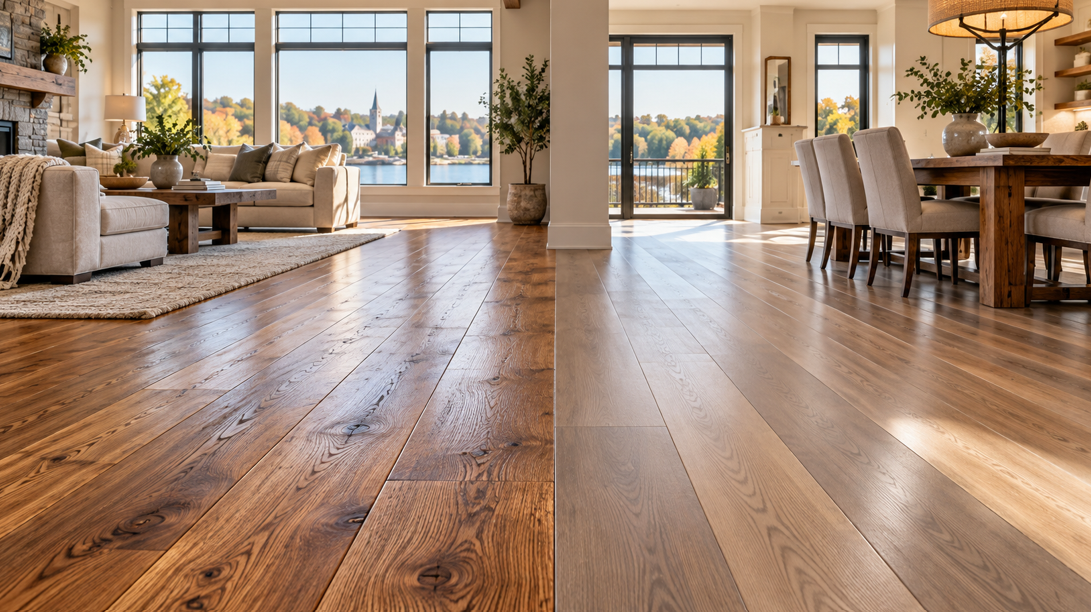
Hardwood floors never go out of style. They add warmth, character, and lasting value to any home. But when you start shopping, one question comes up right away: is solid hardwood or engineered hardwood the better fit? Both are real wood, both look beautiful, and both have loyal fans. The best choice depends on your home, your lifestyle, and where the floor will go.
At Sheboygan Flooring and Furniture, our knowledgeable team helps Sheboygan Falls families compare their options every day. In this guide, we break down the differences in simple terms so you can choose with confidence.
What Is Solid Hardwood?
Solid hardwood is exactly what it sounds like. Each plank is milled from a single piece of wood, usually about three-quarters of an inch thick. Popular species include oak, maple, hickory, and walnut.
The biggest advantage of solid hardwood is longevity. Because the entire plank is wood, it can be sanded and refinished many times over its life. With proper care, a solid hardwood floor can last for generations.
What Is Engineered Hardwood?
Engineered hardwood features a top layer of real hardwood, called the wear layer, bonded to a core made of plywood or high-density fiberboard. The layers are arranged in a cross-grain pattern, which makes the plank more stable.
From the surface, engineered hardwood looks just like solid hardwood. You see the same natural grain, color, and character. The difference is in what sits beneath the surface.
How They Handle Wisconsin's Climate
This is where the choice really matters for Sheboygan Falls homeowners. Wisconsin experiences big seasonal changes. Summers bring humidity, and winters bring dry indoor air from heating systems.
Wood naturally expands when it absorbs moisture and contracts as it dries out. Solid hardwood is more sensitive to these changes, which can lead to small gaps in winter or slight cupping in humid months.
Engineered hardwood's layered construction resists this movement far better. It stays more stable through temperature and humidity swings, making it an excellent choice for homes that experience big seasonal shifts.
A whole-home humidifier or dehumidifier that keeps indoor humidity between 35 and 55 percent helps either type of floor perform its best.
Where Each Type Works Best
Basements
Basements are one of the clearest dividing lines. Solid hardwood is generally not recommended below grade because of moisture risks. Engineered hardwood can often be installed in basements with proper moisture protection, making it the preferred option for finished lower levels.
Main Living Areas
Both types work beautifully in living rooms, dining rooms, and bedrooms. If you love the idea of refinishing your floors many times over the years, solid hardwood is a strong choice here.
Kitchens
Kitchens see spills and temperature changes. Engineered hardwood's stability gives it an edge, though both types can work with good habits like wiping spills promptly and using mats near the sink.
Over Concrete or Radiant Heat
Engineered hardwood can be glued down or floated over concrete slabs, and many products are compatible with radiant heating. Solid hardwood is usually nailed to a wood subfloor, which limits where it can go.
Comparing Durability and Lifespan
Solid hardwood can typically be refinished five or more times, giving it a very long life. Engineered hardwood can also be refinished, but how often depends on the thickness of its wear layer. A thick wear layer of 3 to 6 millimeters allows for one or more refinishes, while thinner layers may only allow a light screening.
In terms of surface durability, both types resist wear equally well because the top layer is real wood either way. Hardness depends more on the species and finish than on the construction. Hickory and white oak, for example, are excellent choices for busy households.
Style and Design Options
Both solid and engineered hardwood come in a wide range of species, colors, and finishes. In 2026, homeowners are drawn to:
Warm natural tones such as honey, wheat, and light brown
Wide planks that make rooms feel open and modern
White oak for its clean, versatile grain
Matte finishes that look natural and hide everyday wear
Herringbone and chevron patterns for a custom, high-end feel
Engineered hardwood often makes wide planks more practical, since wider boards of solid wood are more likely to move with humidity changes.
Cost Considerations
Pricing varies widely by species, grade, plank width, and finish. In general, solid hardwood and quality engineered hardwood can fall in a similar range. Engineered options may save on installation in certain situations, such as floating floors or installs over concrete.
It is also worth thinking long term. Both types add value to your home, and a well-maintained hardwood floor is a feature buyers love.
Which One Is Right for You?
Here is a simple way to decide:
Choose solid hardwood if you are installing on a main floor over a wood subfloor and want the ability to refinish many times over the years.
Choose engineered hardwood if you are installing in a basement, over concrete, with radiant heat, or want extra stability through Wisconsin's seasons.
Still unsure? Browse our hardwood flooring collection to compare species, colors, and finishes. You can preview styles in your own space with our online visualizer and order samples sent straight to your home.
Caring for Your Hardwood Floors
Whichever type you choose, simple care keeps it looking beautiful:
Sweep or vacuum often to remove grit, especially in winter.
Use a hardwood-safe cleaner and avoid excess water.
Place mats at entryways to catch snow and road salt.
Add felt pads under furniture legs.
Keep indoor humidity steady throughout the year.
Enjoy Hardwood That Lasts
Solid and engineered hardwood both offer timeless beauty and real wood character. Solid hardwood shines for longevity and refinishing, while engineered hardwood excels in stability and versatility. For many Sheboygan Falls homes, the right answer depends on the room, the subfloor, and how your family lives.
Our family-owned team offers free in-home estimates, design consultation, and professional installation to make the process smooth and enjoyable. Contact our team today, and let's find the perfect hardwood floor for your home.


