


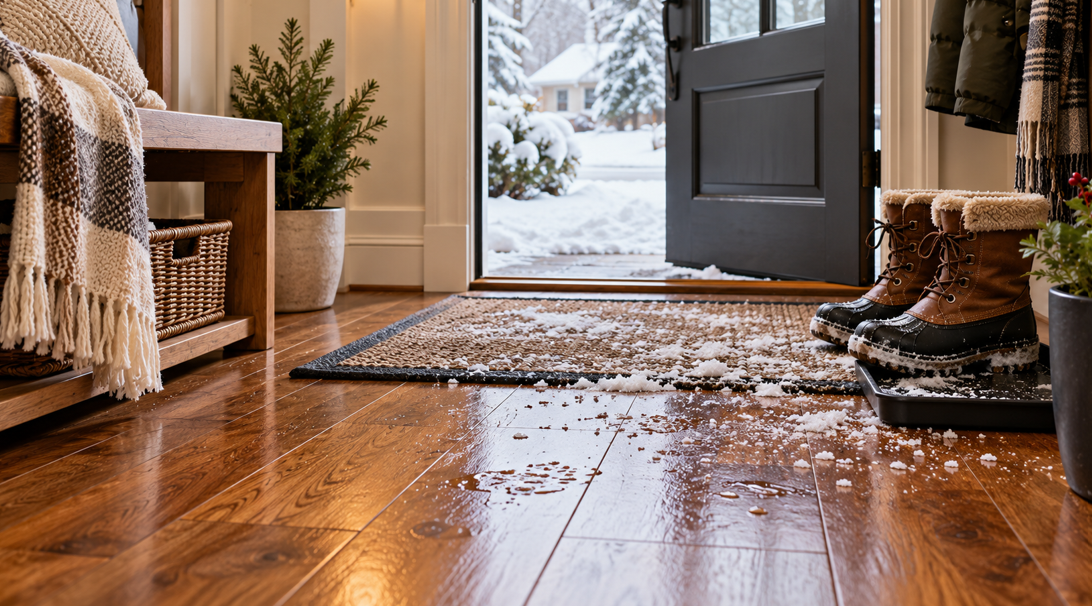
Winter on the Lake Michigan shore is beautiful, but it is tough on floors. From the first November snowfall through the March thaw, Sheboygan homes see a steady stream of boots carrying snow, slush, sand and rock salt through the front door. For hardwood floors, that combination can lead to dull finishes, white residue, scratches and even water damage if left unchecked.
At Sheboygan Flooring and Furniture, our family-owned team helps local homeowners choose, install and care for floors built for Wisconsin life. This guide shares practical steps to protect your hardwood before winter arrives, so your floors stay beautiful well into spring.
How Winter Salt and Snow Affect Hardwood
Understanding the risks makes it easier to prevent them.
Salt residue: Rock salt and ice melt leave a white film that can dull and break down the protective finish over time.
Moisture: Melting snow pools near doors. Standing water can seep into seams and cause cupping or staining.
Grit and sand: Sand spread on sidewalks acts like sandpaper underfoot, leaving fine scratches.
Dry indoor air: Heated winter air pulls moisture from wood, which can cause small gaps between boards.
Start at the Door: Your First Line of Defense
The best way to protect hardwood is to stop salt and snow before they travel inside.
Use Two Mats
Place a coarse, durable mat outside each entry to scrape off snow and grit. Add an absorbent mat or runner inside the door to catch remaining moisture and salt.
Create a Boot Zone
Set up a boot tray or waterproof mat near the entry where family members and guests can leave wet footwear. A small bench nearby makes it easy to sit and remove boots.
Add an Area Rug or Runner
A washable runner in the front hall or mudroom protects high-traffic paths. Always use a non-slip rug pad underneath to prevent slips and protect the finish.
Clean Salt and Moisture Quickly
A quick, regular routine keeps winter residue from building up.
Wipe up puddles right away with a soft, dry cloth.
Sweep or vacuum daily in entry areas to remove sand and grit. Use a vacuum with a hard floor setting, not a beater bar.
Remove salt film with a cleaner made for hardwood floors. Avoid vinegar, steam mops and harsh cleaners that can damage the finish.
Dry the floor fully after cleaning so no moisture remains in seams.
Wash mats and runners often so they do not become a source of salt themselves.
Manage Indoor Humidity Through the Season
Wisconsin winters bring very dry indoor air once the furnace kicks on. Hardwood responds by shrinking slightly, which can create gaps between boards. Summer humidity then causes the wood to expand again.
Keep indoor humidity between about 35 and 55 percent where possible.
Use a humidifier during the heating season to reduce gapping.
Monitor levels with a simple hygrometer.
Expect small seasonal gaps, which often close again in spring.
Choose Hardwood and Finishes Built for Winter
If you are planning new floors, some choices hold up better to Sheboygan winters.
Harder species: Oak, hickory and maple resist dents and scratches better than softer woods.
Engineered hardwood: Its layered construction offers added stability in changing humidity.
Durable finishes: A quality factory finish or multiple coats of polyurethane add protection against salt and wear.
Matte or satin sheens: Lower sheens help hide fine scratches and salt marks.
Wire-brushed textures: Textured surfaces disguise everyday wear in busy homes.
You can compare species, colors and finishes in our selection of hardwood flooring, and order free samples to see how each looks in your home.
Prepare Your Floors Before the First Snow
Fall is the ideal time to get ahead of winter.
Inspect your floors for worn finish, especially near exterior doors.
Consider a maintenance recoat if the finish looks dull or thin.
Add felt pads to furniture legs before the family spends more time indoors.
Set up your mats, runners and boot trays before the first storm.
Address any damaged boards now so moisture cannot get underneath.
Common Winter Mistakes to Avoid
Some well-meaning habits can do more harm than good on hardwood floors.
Spreading ice melt on indoor steps or thresholds.
Letting wet boots dry on bare wood overnight.
Using rubber-backed mats that can trap moisture and discolor the finish.
Mopping with too much water, which can seep between boards.
Ignoring small finish wear until it becomes a larger repair.
Winter Living in Sheboygan
Sheboygan families know how to make the most of winter, from walks along the frozen lakefront to sledding with the kids and holiday gatherings with friends. All that activity means more traffic through your entry. A few simple habits let you enjoy the season without worrying about your floors. As a local, family-owned business, we understand what local homes face each year.
How Our Team Can Help
If winter has already left its mark, our flooring repairs service can address scratches, worn spots and damaged boards. We also offer design consultation, installation and free in-home estimates for homeowners ready to upgrade to a more winter-ready hardwood floor.
Keep Your Hardwood Beautiful All Winter
Protecting hardwood from Sheboygan salt and snow comes down to a few smart steps: stop moisture at the door, clean residue quickly, manage indoor humidity and choose durable finishes. With a little preparation now, your floors can look their best when spring arrives.
Visit our showroom at 3918 Enterprise Drive in Sheboygan, Monday through Friday from 10am to 6pm, order free samples or book a free in-home estimate. Want advice on protecting or upgrading your floors? Contact our team and we will help you prepare for the season ahead.


