


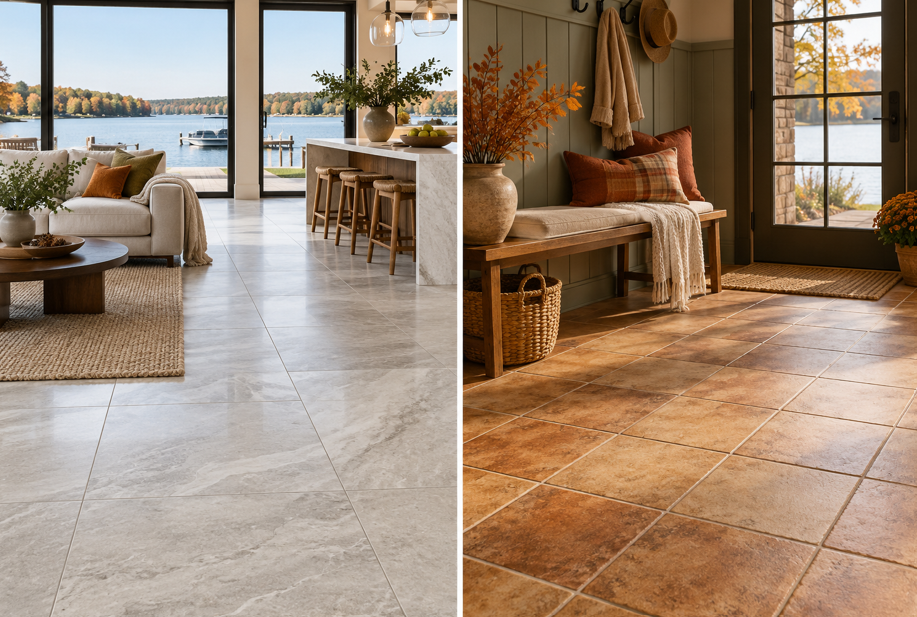
Whether you own a year-round home near the village or a lake cottage you open each summer, Elkhart Lake living puts real demands on your floors. Wet swimsuits, sandy feet in July and snowy boots in January all head straight for the entry, kitchen and bathroom. Tile is one of the most reliable answers, but the first question most homeowners ask is simple: porcelain or ceramic?
At Sheboygan Flooring and Furniture, our family-owned team helps homeowners across Sheboygan County compare tile options every day. This guide explains how porcelain and ceramic differ, where each one works best and how to choose the right fit for your Elkhart Lake home.
What Is the Difference Between Porcelain and Ceramic Tile?
Both porcelain and ceramic tiles are made from clay and fired in a kiln. The difference comes down to the clay mix and how the tile is made.
Porcelain tile uses a finer, denser clay and is fired at higher temperatures. The result is a harder tile that absorbs very little water.
Ceramic tile uses a coarser clay and is fired at lower temperatures. It is slightly softer and more porous, and usually has a glazed surface for color and protection.
Both are beautiful, durable and easy to clean. The right choice depends on where the tile will go and how the space is used.
Porcelain Tile: Strengths and Considerations
Where Porcelain Shines
Water resistance: Porcelain absorbs very little moisture, making it ideal for bathrooms, mudrooms, laundry rooms and basements.
Durability: Its dense body resists chips and wear in high-traffic areas.
Through-body color: Many porcelain tiles carry color through the tile, so small chips are less visible.
Design range: Porcelain comes in wood-look, stone-look and large format styles that suit modern and traditional homes.
Points to Weigh
Porcelain is heavier and harder to cut, so professional installation is recommended.
It often costs a little more than ceramic per square foot.
Ceramic Tile: Strengths and Considerations
Where Ceramic Shines
Value: Ceramic is often the more budget-friendly option, which helps on larger projects.
Easy to work with: It is lighter and easier to cut, which can simplify installation.
Color and pattern variety: Glazed ceramic offers bright colors, decorative patterns and classic subway styles.
Wall applications: Ceramic is a popular choice for backsplashes and shower walls.
Points to Weigh
Ceramic is more porous, so it is better suited to lower-moisture rooms or walls.
The glaze protects the surface, but a chip can reveal the clay color underneath.
Which Tile Works Best in Each Room?
Here is a quick room-by-room guide for Elkhart Lake homeowners:
Entryways and mudrooms: Porcelain is the stronger choice. It stands up to snow, salt, slush and sandy summer traffic.
Bathrooms: Porcelain for floors, especially in showers. Ceramic works beautifully on walls and backsplashes.
Kitchens: Both can work. Porcelain offers extra durability for busy family kitchens.
Basements: Porcelain handles moisture and temperature changes well.
Living areas: Wood-look porcelain gives the warm look of hardwood with water resistance.
Backsplashes and accent walls: Ceramic offers color and pattern at a friendly price.
To compare colors, sizes and finishes, explore our full range of tile flooring and order free samples sent straight to your door.
Wisconsin Weather and Your Tile Choice
Life near the lake brings humid summers and cold, snowy winters. Tile handles both well, but a few local factors are worth planning for:
Freeze and thaw cycles: For three-season porches or unheated spaces, porcelain is the safer option because it absorbs so little water.
Salt and grit: Winter salt can dull some glazes over time. Choose a durable finish and keep a mat at the door.
Slip resistance: Look for textured or matte finishes in entries and bathrooms where wet feet are common.
Cold floors: Tile can feel cool in winter. Area rugs or radiant floor heating can add warmth.
Lake Home Living in Elkhart Lake
Many Elkhart Lake properties welcome guests through summer weekends and quieter months alike. Tile is a smart match for this lifestyle because it is easy to clean between visits and resists the moisture that comes with lake days. For holiday homes that may sit empty for part of the winter, porcelain offers added peace of mind against temperature swings. Stone-look and wood-look porcelain also pair well with the relaxed, natural style many lake homes enjoy.
Caring for Porcelain and Ceramic Tile
Both tile types are low maintenance. A simple routine keeps them looking great:
Sweep or vacuum regularly to remove grit that can scratch the surface.
Mop with warm water and a pH-neutral cleaner.
Seal grout lines as recommended to resist stains and moisture.
Wipe up salt residue in winter to protect the finish.
Place mats at exterior doors to catch snow and sand.
How Our Team Helps
Choosing tile is easier with an expert by your side. Our knowledgeable team offers design consultation, free in-home estimates, installation and job supervision, so your project stays on track from the first sample to the final grout line. We carry options for every budget, from value-focused ceramic to premium porcelain, natural stone and glass tile.
Find the Right Tile for Your Elkhart Lake Home
Porcelain offers top durability and water resistance for entries, bathrooms and basements, while ceramic brings beautiful color and value to walls, backsplashes and lighter-traffic rooms. Many Elkhart Lake homes use both to get the best of each, pairing porcelain floors with ceramic walls for a finished, cohesive look.
Visit our showroom at 3918 Enterprise Drive in Sheboygan, Monday through Friday from 10am to 6pm, browse online or book a free in-home estimate. Have questions about your project? Reach out to us and our team will help you choose tile you will enjoy for years.


