


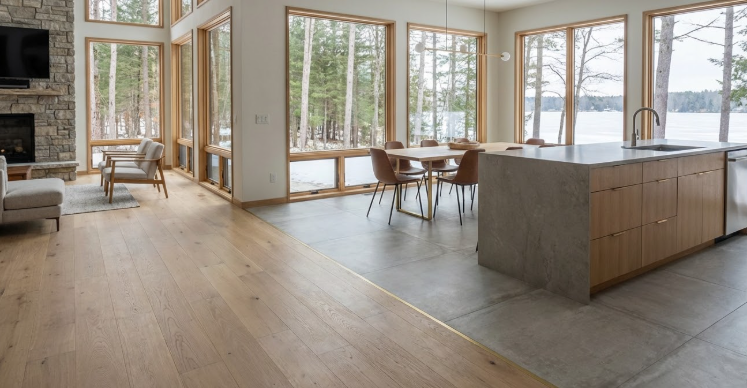
Designing a home in Wisconsin means thinking about more than just style. You’re balancing snowy boots in winter, humid afternoons in summer, and the everyday wear of busy family life. That’s why more homeowners in Sheboygan, Kohler, and Manitowoc are blending materials instead of sticking to just one.
One of the most popular design trends right now? Combining tile with hardwood.
When done right, this pairing creates a space that feels intentional, practical, and visually striking. You get the warmth and natural character of hardwood in living areas, along with the durability and moisture resistance of tile in high-traffic zones.
At Sheboygan Flooring and Furniture, we help homeowners design flooring plans that reflect both their lifestyle and Wisconsin’s changing seasons. Whether you're remodeling a kitchen in Kohler or building new in Sheboygan Falls, mixing materials can elevate your space in a way that feels modern but timeless.
In this guide, we’ll cover:
Why tile and hardwood work so well together
Where to transition between materials
Popular layout ideas for open-concept homes
Design styles that fit Midwest architecture
Practical considerations for installation
How to choose the right combination for your home
Let’s break it down.
Why Tile and Hardwood Are a Perfect Match in Wisconsin Homes
Some design trends fade quickly. This one doesn’t. Combining hardwood and tile isn’t about being flashy — it’s about smart design.
Function Meets Warmth
Hardwood brings warmth, texture, and a sense of craftsmanship. It works beautifully in:
Living rooms
Dining areas
Bedrooms
Home offices
Tile, on the other hand, shines in areas exposed to moisture and heavy traffic:
Kitchens
Entryways
Mudrooms
Bathrooms
In Wisconsin, where winter means snow, salt, and slush, tile near exterior doors protects your hardwood from long-term damage.
Visual Contrast Adds Depth
When you mix materials, you introduce contrast. That contrast creates visual interest, especially in open-concept homes common throughout Kohler and Sheboygan.
Tile can define functional zones without adding walls. Hardwood keeps shared spaces feeling cohesive and inviting.
Increased Durability Where It Matters
Snow boots in January. Mud in April. Lake days in July. Wisconsin homes take a beating.
Tile flooring offers superior resistance to moisture and stains in high-impact areas, while hardwood provides lasting beauty in lower-risk spaces.
Together, they create balance — practical and beautiful at the same time.
Where to Combine Tile and Hardwood for Maximum Impact
The secret isn’t just using both materials. It’s placing them intentionally.
Entryway to Living Room Transitions
A tiled entry that flows into hardwood living space is one of the most popular layouts. The tile acts as a protective buffer zone for wet footwear.
This works especially well in homes with attached garages or front-facing entrances that see heavy winter traffic.
Kitchen and Dining Areas
In many Sheboygan homes, kitchens open directly into dining or family rooms. Installing tile in the kitchen and hardwood in adjacent spaces allows for:
Easier cleanup near sinks and stoves
Seamless entertaining flow
Defined but open zones
Strategic transitions can make the layout feel customized rather than segmented.
Bathrooms Off Hardwood Hallways
Hardwood hallways leading into tiled bathrooms create a natural visual shift. The contrast feels purposeful and polished.
Careful color coordination keeps the transition smooth rather than abrupt.
Modern Transition Styles That Work Beautifully
Gone are the days of clunky metal strips dividing rooms. Today’s transitions are clean, intentional, and design-driven.
Straight-Line Transitions
A clean, straight border between hardwood and tile creates a minimalist, contemporary look. This works well in modern Kohler homes with open layouts.
Herringbone or Patterned Borders
For homeowners who want something distinctive, a patterned tile border between materials adds personality. It works especially well in transitional and farmhouse-inspired homes.
Flush Transitions
When installed at the same height, hardwood and tile can meet seamlessly. This approach requires precise planning but delivers a smooth, uninterrupted look.
Mixed Geometry Designs
Some homeowners choose geometric tile patterns that subtly weave into hardwood edges. This creates an artistic, custom feel without overwhelming the space.
The key is thoughtful planning — and professional guidance ensures it looks intentional rather than improvised.
Design Styles That Shine with Mixed Flooring
Mixing materials isn’t limited to one aesthetic. In fact, it enhances several popular Wisconsin design styles.
Modern Farmhouse
Textured tile paired with warm-toned hardwood creates contrast while maintaining comfort. Neutral palettes help unify the space.
Scandinavian Minimalism
Light hardwood combined with clean-lined tile supports an airy, simple feel — perfect for bright open homes in Manitowoc or Sheboygan Falls.
Rustic Lake House
Stone-look tile near entrances paired with character-rich hardwood evokes a cozy, lakeside vibe.
Contemporary Midwest
Large-format tile next to smooth, matte-finish hardwood delivers a sleek, updated appearance without feeling cold.
For homeowners exploring options, browsing different tile textures and hardwood finishes side by side can spark creative combinations.
If you’re considering updating your floors, explore our selection of tile flooring to see what materials could complement your hardwood.
Practical Considerations Before You Combine Materials
Beautiful design is only part of the equation. A successful flooring blend also requires careful planning.
Subfloor Preparation
Tile and hardwood require different subfloor conditions. Ensuring proper leveling prevents uneven transitions.
Expansion Gaps
Hardwood naturally expands and contracts with humidity changes — especially in Wisconsin. Tile remains stable. Installation must account for this difference.
Height Differences
Materials must align properly in thickness. Skilled installation ensures a smooth, safe transition without tripping hazards.
Maintenance Differences
Tile may require grout cleaning. Hardwood may need periodic refinishing. Choosing finishes that complement each other simplifies long-term upkeep.
When done professionally, mixed flooring feels cohesive, not complicated.
How to Choose the Right Tile and Hardwood Combination
If you’re unsure where to start, focus on these practical steps.
Start with a Dominant Material
Decide which material will anchor the majority of your space. Hardwood often leads in living areas, while tile dominates kitchens and bathrooms.
Match Undertones
Even contrasting materials should share undertones — warm with warm, cool with cool. This keeps the design cohesive.
Consider Lighting
Natural light can shift how wood and tile appear. Bring samples home to see them in your space.
Think About Lifestyle
Do you have pets? Kids? Frequent guests? Durability may guide your material choices as much as style.
At Sheboygan Flooring and Furniture, we offer free in-home estimates to help homeowners visualize combinations before committing.
If you're ready to explore custom flooring solutions for your home, we invite you to get in touch. Our experienced team can walk you through options that suit your space, your design vision, and Wisconsin living.
Mixing tile and hardwood isn’t about following a trend. It’s about designing a home that feels modern, functional, and uniquely yours — built to handle Midwest life with style.


