


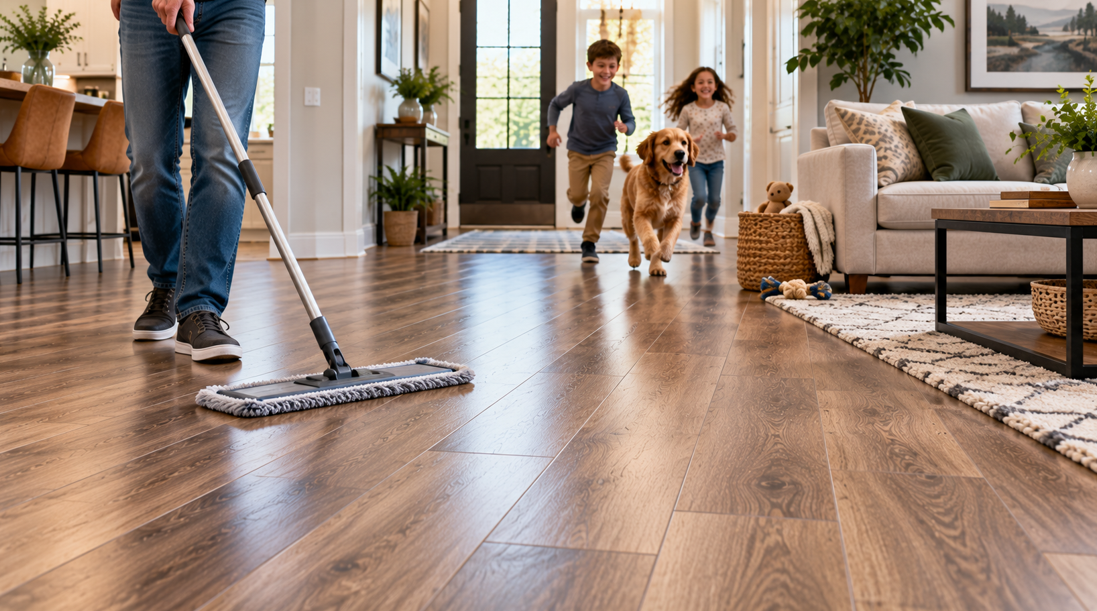
Laminate flooring is built for everyday living, which is one reason it works so well in busy homes. Hallways, family rooms, kitchens, entry areas, and other frequently used spaces can see thousands of footsteps over time, along with shoes, pets, furniture movement, dirt, and the occasional spill.
Even a durable floor benefits from the right care.
A few simple habits can help laminate maintain its appearance and perform well for years without turning floor care into another demanding household task. The key is dealing with dirt before it becomes abrasive, cleaning spills promptly, protecting high-use areas, and using products that are appropriate for laminate surfaces.
For homeowners around Sheboygan and throughout Wisconsin, seasonal conditions can make these habits even more valuable. Rain, snow, road salt, grit, and moisture can all make their way indoors on shoes and boots.
If you are choosing flooring for an active household, Sheboygan Flooring and Furniture can help you compare options suited to your home's traffic levels, style, and everyday routine.
Whether your laminate is already installed or you are considering it for your next project, good maintenance does not need to be complicated. A consistent routine can go a long way toward preserving the clean, attractive look that made you choose the floor in the first place.
Understand What High Traffic Does to Laminate Floors
High traffic does not simply mean a large number of people walking through a room. It includes everything that regularly comes into contact with the flooring.
A hallway used throughout the day may experience more concentrated wear than a large bedroom. An entryway may see fewer total steps but receive more grit, moisture, and outdoor debris. A family room may deal with children, pets, rolling toys, furniture movement, and frequent entertaining.
Understanding where that wear comes from makes it easier to prevent unnecessary damage.
Dirt and Grit Can Act Like Abrasives
Small particles may seem harmless, but dirt and grit can be dragged across the floor by shoes, pets, and furniture.
Over time, those particles can contribute to surface wear, especially in pathways that people use repeatedly.
This is why regular dry cleaning matters so much in active areas. Removing debris before it gets ground into the surface is often easier than trying to address visible wear later.
Pay particular attention to:
Entry doors
Hallways
Routes between the kitchen and living area
Areas around dining tables
Spaces near pet doors
Mudroom transitions
Frequently used stairs or landings where laminate is installed
A clean-looking floor can still have fine grit on it, so routine sweeping or vacuuming is useful even when the room does not appear particularly dirty.
Moisture Requires Prompt Attention
Laminate flooring and standing moisture are not a good combination. While some laminate products offer enhanced water resistance, care requirements vary by manufacturer and product line.
Spills are easier to manage when they are addressed promptly.
The same principle applies to moisture brought in from outdoors. During a Wisconsin winter, snow can melt from boots and create small wet areas near an entry. Rainy days can create similar conditions.
Rather than letting water sit, wipe it up and allow the area to dry.
Repeated Furniture Movement Matters Too
Dining chairs, desk chairs, stools, and movable furniture can create repeated contact with the same areas.
That does not mean you need to stop moving furniture normally. Instead, protect points of repeated friction and check furniture feet periodically.
Preventive care tends to be easier than dealing with scratches or surface marks after they appear.
Build a Simple Cleaning Routine You Can Actually Maintain
The best laminate care routine is one that fits naturally into normal household cleaning.
There is little value in creating an elaborate schedule that becomes unrealistic after a few weeks. Focus instead on regular debris removal, sensible damp cleaning, and quick attention to spills.
Sweep or Vacuum High-Traffic Areas Regularly
Start with dry soil.
Use a soft-bristle broom, microfiber dust mop, or a vacuum setting appropriate for hard flooring. If your vacuum has a rotating brush designed primarily for carpet, check whether it can be switched off or adjusted for hard floors.
Concentrate on the pathways that receive the most use.
For example, the route from an exterior door to the kitchen may need attention more frequently than a corner of a guest room.
Regular cleaning helps remove:
Dust
Pet hair
Crumbs
Sand
Small stones
Outdoor grit
Dried soil
Do not wait until debris becomes highly visible. Small abrasive particles can be present long before the floor looks dirty.
Damp Clean Instead of Saturating the Floor
When the floor needs more than sweeping or vacuuming, use a cleaning method recommended for your specific laminate product.
In general, laminate is better suited to controlled damp cleaning than soaking-wet methods.
Avoid leaving puddles or excess liquid behind. A lightly damp microfiber mop can provide enough moisture for routine cleaning without flooding the surface.
Because laminate products differ, always follow the care instructions supplied by the flooring manufacturer. Those instructions take priority over generic cleaning advice.
Clean Spills Promptly
Everyday spills happen, particularly in kitchens, dining rooms, and homes with children or pets.
Blot or wipe up liquids promptly with a clean absorbent cloth. Then clean the area according to the manufacturer's recommendations if residue remains.
Pay attention to spills around plank edges and transitions, where liquid can collect.
Quick cleanup is one of the simplest habits for maintaining a busy laminate floor.
Be Selective About the Cleaning Products You Use
More cleaning product does not necessarily mean a cleaner floor.
Some household cleaners can leave residue, create a dull-looking film, or be unsuitable for a laminate surface. The safest approach is to use products specifically approved by the flooring manufacturer.
Avoid Assuming Every Hard-Floor Cleaner Is Suitable
A bottle labeled for floors may be designed for several materials, and those materials can have very different care requirements.
Before using a new product:
Check your laminate manufacturer's maintenance guidance.
Read the cleaner's label carefully.
Confirm that it is suitable for laminate flooring.
Follow dilution and application directions.
Test cautiously if the manufacturer recommends doing so.
This is particularly important if your floor has a specific surface treatment or warranty requirements.
Skip Wax and Polish Unless Specifically Approved
Laminate floors generally do not need the waxing and polishing routines associated with some traditional flooring surfaces.
Applying an unsuitable polish or wax can create buildup rather than improving the appearance.
If the flooring starts looking dull, first check whether cleaning residue is present and review the manufacturer's instructions before adding another product.
Be Careful With Steam
Steam cleaning introduces heat and moisture, and it is not appropriate for every laminate floor.
Rather than assuming a steam mop is safe, check the care instructions for your exact product. If steam cleaning is not explicitly approved, choose another recommended method.
The same rule applies to any aggressive cleaning technique. Product-specific guidance is more reliable than a one-size-fits-all cleaning trend.
Protect the Busiest Pathways Before Wear Becomes Noticeable
Cleaning is only one part of laminate care. High-traffic flooring can also benefit from practical protection in locations that consistently receive the most use.
This is particularly helpful around entrances, hallways, dining areas, and frequently used workspaces.
Use Entry Mats Strategically
A good entry mat helps stop outdoor debris before it travels through the house.
Place mats at commonly used exterior doors and encourage household members to wipe footwear when coming inside.
In Wisconsin, this becomes particularly useful during wet and snowy seasons when boots can carry:
Moisture
Sand
Road grit
Salt residue
Mud
An exterior mat can remove some debris before people enter, while an interior mat provides another opportunity to catch remaining moisture and particles.
Check that any mat or backing material you use is compatible with your particular flooring.
Consider Rugs in Heavily Used Areas
Rugs can provide another layer of protection while also adding color and softness.
Useful locations may include:
Entry areas
Long hallways
In front of frequently used seating
Under dining tables
Near kitchen work zones when appropriate
Home-office areas
Keep rugs clean too. Dirt trapped underneath or within a rug can still find its way onto the floor.
If you are planning a new high-use space, choosing quality laminate flooring that suits the room's expected traffic is an important starting point, but ongoing care still plays a major role in how the surface looks over time.
Keep Mats and Rugs Stable
A rug that constantly slides can become inconvenient and may create unwanted friction.
Use a rug pad or backing that is specifically suitable for laminate and for the rug itself. Avoid assuming that any rubber or adhesive-backed product is appropriate.
Compatibility matters because certain backing materials can potentially interact with some flooring finishes.
Manufacturer guidance is the best reference when you are uncertain.
Prevent Scratches From Furniture and Everyday Movement
Furniture is another common source of concentrated wear in busy rooms.
Chairs move in and out. Sofas shift slightly. Tables get repositioned. Desks and storage pieces may occasionally be moved for cleaning.
A few protective habits can make those movements easier on the flooring.
Add Protective Pads to Furniture Feet
Use suitable felt or other manufacturer-approved protective pads beneath furniture legs.
These are especially useful under:
Dining chairs
Kitchen stools
Side tables
Sofas
Armchairs
Beds
Desks
Freestanding cabinets
Inspect the pads occasionally. They can collect grit, compress, loosen, or fall off over time.
A worn protective pad may no longer provide the protection you expect.
Lift Heavy Furniture When Possible
Dragging a heavy piece directly across laminate can put unnecessary pressure on the surface.
When furniture needs to be repositioned, lifting it or using an appropriate moving system is a better approach.
For very heavy pieces, use adequate help and proper moving equipment rather than risking injury or damage.
Think About Rolling Chairs
A home office can create concentrated wear because a rolling chair travels over the same small area repeatedly.
If you use a chair mat, make sure it is specifically suitable for hard flooring and compatible with laminate.
You can also look at caster options intended for hard floors, provided they are suitable for your chair and flooring. Follow the flooring manufacturer's recommendations where available.
The main goal is to reduce unnecessary repeated abrasion while keeping the workspace comfortable and functional.
Give Extra Attention to Homes With Pets and Children
Busy family homes have their own flooring challenges, but care does not need to become a constant project.
It helps to focus on the sources of wear you can control.
Keep Pet Nails Maintained
Pet nails can create extra contact with flooring, particularly when a dog runs, changes direction quickly, or gets excited near an entry.
Regular nail care can help reduce unnecessary scratching while supporting the pet's general comfort.
Also clean muddy or wet paws when pets come indoors, especially during rainy and snowy weather.
Clean Food and Drink Spills Early
Children's play spaces and dining areas often see more spills than other parts of the house.
Keep a clean cloth accessible so liquid can be addressed quickly rather than left until the next scheduled cleaning.
For sticky residue, use the cleaning method recommended by your flooring manufacturer instead of scrubbing aggressively.
Choose Play Areas Thoughtfully
If children frequently play with wheeled toys, blocks, or craft supplies, an appropriate area rug or play mat may help protect frequently used sections of the floor.
Again, make sure any backing material is suitable for laminate.
The objective is not to cover the entire floor. Strategic protection in concentrated activity zones can be enough.
Adjust Your Care Routine for Wisconsin Seasons
Seasonal weather changes what gets tracked through the door, so laminate maintenance may need small adjustments throughout the year.
Wisconsin winters deserve particular attention because snow, slush, road treatments, and grit can collect around entries.
During Winter
Set up an entry routine that catches moisture early.
Consider:
An exterior mat
An absorbent interior mat
A designated place for wet boots
Prompt wiping of melted snow
More frequent sweeping around the entry
Avoid allowing damp boots to sit directly on laminate for extended periods.
Salt and grit can also spread farther into a home than expected, so check nearby hallways and connecting rooms regularly.
During Spring
Spring can bring rain, mud, and damp footwear.
Continue using entry mats and clean muddy spots promptly. This can also be a useful time to inspect furniture pads and rug backings after months of heavier indoor use.
During Summer
More outdoor activity can mean sand, dry soil, and grass coming indoors.
If doors are opening frequently, high-traffic areas may benefit from more regular vacuuming or sweeping.
During Fall
Leaves and outdoor debris can break into small particles after being tracked inside.
Regular dry cleaning around entrances can prevent that material from traveling throughout the house.
These adjustments are simple. You are not rebuilding your cleaning routine every season; you are responding to the type of debris that is most likely to enter the home.
Know When a Flooring Problem Needs Professional Advice
Good maintenance helps protect laminate, but not every flooring issue can be solved with cleaning.
If you notice a persistent change in the floor, avoid experimenting with aggressive products or DIY repairs before identifying the cause.
Examples worth investigating include:
Planks that appear swollen or distorted
Significant separation between boards
Persistent moisture-related concerns
Damaged transitions
Deep scratches or impact damage
Movement that was not previously present
The appropriate solution depends on the flooring system, installation, product specifications, and what caused the problem.
Some damage may be localized, while other issues can indicate an underlying moisture or installation concern.
Photographs can be useful when discussing the issue with a flooring professional. If you know the manufacturer, product name, and installation date, keep that information available as well.
Avoid applying fillers, coatings, adhesives, or repair products unless you know they are suitable for the specific floor. A treatment intended for another surface may create a bigger problem rather than solving the original one.
Make Long-Term Laminate Care Part of Everyday Life
Keeping laminate flooring looking attractive in a high-traffic home comes down to consistent habits more than intensive maintenance.
Focus on the actions that make the biggest practical difference:
Sweep or vacuum grit before it gets ground into the surface.
Wipe up spills and tracked-in moisture promptly.
Follow the manufacturer's cleaning instructions.
Avoid saturating the floor during routine cleaning.
Use suitable entry mats to reduce outdoor debris.
Protect furniture contact points with appropriate pads.
Keep rugs and their undersides clean.
Check that rug pads, mats, and chair protectors are laminate-compatible.
Adjust entryway cleaning during Wisconsin's wet and snowy seasons.
Ask for professional guidance when damage goes beyond normal cleaning.
There is no need to treat your floors as if they cannot handle everyday life. Laminate is meant to be lived on. Thoughtful care simply helps protect the appearance and performance of the surface while your household gets on with normal routines.
That is particularly important in hallways, family rooms, kitchens, entry areas, and other spaces where activity rarely slows down. Small preventive steps taken regularly are usually more manageable than trying to correct months of accumulated dirt, moisture exposure, or friction later.
If you are considering laminate for a busy room or need help choosing an option that fits the way your household lives, get in touch with Sheboygan Flooring and Furniture for personalized guidance.


