


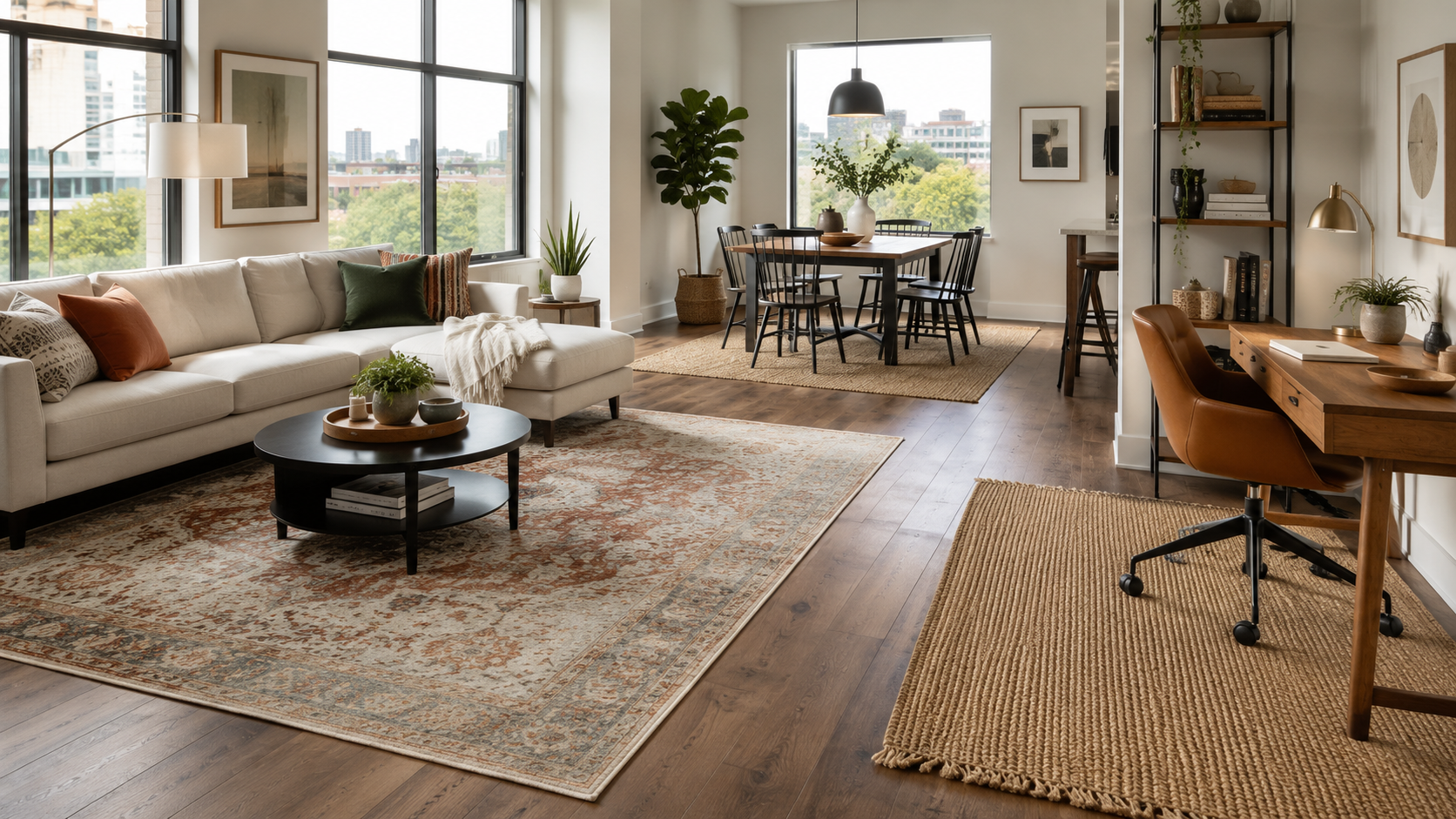
Open-concept apartments can feel bright, flexible, and spacious, but they can also leave you wondering where one area ends and the next begins. When the living room flows into the dining area and a work-from-home setup shares the same sightline, furniture alone does not always create enough visual structure.
That is where area rugs can make a big difference. A well-placed rug gives the eye a clear boundary, helping each part of an apartment feel purposeful without adding walls, bulky dividers, or permanent changes. For renters in Wisconsin, that flexibility is especially useful because you can refresh the layout without altering the space itself.
Rugs also add softness underfoot, introduce color and texture, and help furniture groupings look connected instead of scattered. In a studio, a rug can help a bed feel like its own sleeping zone.
When you are ready to compare colors, textures, and styles in person, Sheboygan Flooring and Furniture can help you explore options that suit how you actually use your home.
The key is not to place rugs everywhere. It is to use the right size, shape, color, and placement for each activity zone. Once those elements work together, even one open room can feel organized, comfortable, and intentionally designed.
Start by Deciding What Each Part of the Room Needs to Do
Before choosing a pattern or color, think about function. A rug works best when it supports the purpose of a specific area, so start by identifying what happens in each part of the apartment.
Identify the Main Zones
Walk through the room and look for the activities that already take place there. Common apartment zones include:
A living and conversation area
A dining space
A home office
A reading corner
An entryway
A sleeping area in a studio
A play space for children
Not every zone needs its own rug. Focus on the areas where a rug makes the layout easier to understand at a glance.
Look for Natural Boundaries
Architecture and furniture often provide clues about where one zone begins and another ends. A kitchen island may create a natural edge between cooking and dining. A window can help anchor a reading chair. A pendant light over a dining table can establish the center of that space.
Furniture groupings are especially useful. A sofa facing two chairs already suggests a conversation area. A desk and bookcase create a work zone. The rug's job is to reinforce those relationships rather than invent a completely new layout.
Measure Before You Shop
Measure the full room first, then measure the furniture grouping you want the rug to define.
Also check:
Walking paths between zones
Clearance around doors
Space between the rug and nearby walls
How far dining chairs move when pulled out
The footprint of desks and rolling chairs
Painter's tape can be surprisingly helpful. Mark the outline of a possible rug size directly on the floor and live with it for a few minutes. You will quickly see whether the proportions feel balanced.
Choosing a rug based only on an attractive design can lead to proportions that do not work once the rug is actually in your apartment. A few measurements give you a much clearer starting point.
Use the Right Rug Size to Make Each Zone Feel Intentional
Rug size affects how connected a furniture grouping appears. If the rug is too small, chairs and sofas can look like separate pieces floating around the room. If the rug is sized appropriately, it acts like a visual foundation that ties everything together.
Defining the Living Area
In a living area, the rug needs to relate directly to the seating. There are a few common approaches, and the best one depends on the size of your apartment.
One option is to place all major furniture legs on the rug. This creates a strong, unified look and often works well in larger living areas. Another is to place only the front legs of the sofa and chairs on the rug. This is a practical choice for many apartments because it connects the seating without requiring an oversized rug.
In a particularly compact room, a smaller rug centered beneath the coffee table can work, but it needs to look intentional. If there is too much empty space between the rug and the furniture, the arrangement may feel disconnected.
There is no single layout that works for every apartment. The room dimensions, furniture size, walking space, and overall style all play a role.
Defining the Dining Area
Dining rugs need enough coverage to accommodate movement. Ideally, the chairs can remain on the rug when guests pull them away from the table.
A rug that ends directly beneath the chair legs can make the dining area feel undersized, and chairs may catch on the edge.
For an open living and dining layout, the dining rug can also create useful separation from the seating area. The shape of the rug can reinforce the table shape, while the color or material can coordinate with the living room rug nearby.
Defining Smaller Zones
Compact zones often need less coverage. A reading corner may only need enough rug area to frame a chair, side table, and lamp. A small home office might use a rug to define the desk footprint. An entry rug can mark the transition from the doorway into the main living space.
The goal is not to cover empty floor. It is to visually frame the activity.
Match Rug Shape and Placement to the Space You Are Creating
Rectangular rugs are the most familiar choice, but shape can be another useful design tool. Matching the rug shape to the furniture or purpose of the zone makes the boundary feel more natural.
Rectangular Rugs
Rectangular rugs work well in living rooms, under beds, beneath many dining tables, and in longer open-plan spaces. Their straight edges create a clear visual frame and align easily with sofas, media units, dining tables, and desks.
They are particularly useful when the furniture already follows strong horizontal or vertical lines.
Round Rugs
Round rugs can soften a room filled with straight lines. They are especially useful beneath round dining tables, in reading corners, near entryways, or in small conversation areas.
Because a round rug has no strong corners, it can make a compact zone feel welcoming rather than boxed in. It can also create a deliberate contrast beside a rectangular living room rug.
Runners
Runners work differently. Instead of defining an activity area, they guide movement. They are useful in hallways, entryways, narrow kitchens, or transitional paths between two larger zones.
A runner can visually identify a walkway, helping circulation feel more obvious in an apartment where several activities share one open room.
Let Furniture Guide Placement
Do not assume every rug has to sit in the exact center of the room. In an open-concept layout, the furniture grouping is often a better reference point than the walls.
If your living area occupies only part of a large room, center the rug on the sofa and chairs rather than on the room itself. The arrangement will feel more cohesive because the rug is supporting the furniture it belongs with.
Comparing different sizes, materials, patterns, and shapes can also make it easier to narrow down area rugs that fit both your room dimensions and the way each zone is used.
Coordinate Multiple Rugs Without Making the Apartment Feel Busy
Using more than one rug in the same room can work beautifully, but the rugs need some visual relationship. They do not have to match exactly; aim for coordination without duplication.
Choose One Common Element
Two rugs can feel connected if they share one noticeable feature. That might be:
A repeating color
Similar warm or cool undertones
Related textures
Comparable materials
A consistent design style
For example, a patterned living room rug with warm beige and muted blue could sit near a simpler dining rug that repeats the beige tone. The rugs remain different, but the common color keeps the overall room from feeling random.
This approach gives each zone its own identity while maintaining a cohesive look across the apartment.
Balance Pattern With Simplicity
If one rug has a bold pattern, consider choosing a quieter rug for the next zone. Multiple highly detailed patterns competing in one sightline can make a small apartment feel visually crowded.
Useful combinations include:
Patterned living room rug with a solid dining rug
Textured neutral rug with a subtle geometric office rug
Bold studio sleeping-area rug with a simple runner
Think of one rug as the focal point and the others as supporting pieces.
Pay Attention to Visual Distance
Rugs in separate rooms do not need to coordinate as closely as rugs you can see at the same time. In an open-plan apartment, however, nearby rugs benefit from some visual connection.
Stand in the main entry or seating area and look across the room. If the rugs seem to compete for attention, reduce the contrast. If they blend so completely that the zones disappear, introduce a little more difference in pattern, color, or texture.
Work With the Existing Floor
The flooring underneath is part of the design. Wood-look flooring, laminate, luxury vinyl, tile, and carpet all create different backgrounds.
A rug needs enough contrast to be visible, but not so much that it feels disconnected from the room. On a warm wood-look floor, for example, a rug with compatible warm undertones can feel cohesive. On a cool gray floor, a rug with cooler neutrals may create a more seamless look.
Create Specific Zones for Living, Dining, Working, and Relaxing
Once the overall layout is clear, use each rug to support the way that area functions every day.
Living Zone
The living room rug usually anchors the main seating arrangement. Orient it with the sofa, and keep the chairs or other major pieces visually connected to it.
Leave some visible flooring around the rug so the boundary remains clear. If the rug runs wall to wall, the zone can lose the distinct framed effect you are trying to create.
Comfort matters here too. Living rooms are where people relax, stretch out, play with children, or sit on the floor, so texture can be just as important as appearance.
Dining Zone
Dining areas call for practicality. Chairs move often, spills happen, and crumbs are part of normal life. A rug with a manageable surface can make chair movement easier while still adding color and definition.
Check that the rug extends far enough beyond the table to support normal chair movement. This makes the dining zone feel finished rather than cramped.
A flatter construction may also be worth considering when easy chair movement and routine cleaning are priorities.
Work-From-Home Zone
A rug can make a home office feel separate even when the desk sits in the corner of a living room.
Choose a size that defines the desk and chair footprint without interfering with movement. If you use a rolling chair, pay attention to where the rug edge falls. A poorly positioned edge can interrupt the chair's path throughout the workday.
The office rug does not need to be dramatic. A subtle texture or restrained pattern can provide enough visual separation without competing with the living area.
Reading or Relaxation Corner
An unused corner can become a purposeful retreat with very little furniture. A chair, lamp, small table, and rug can turn a blank spot into a reading or relaxation zone.
A round rug works especially well here because it can soften the corner and create a compact visual boundary.
You can also use the rug's color or texture to make the corner feel slightly different from the main seating area while still coordinating with the room as a whole.
Studio Sleeping Zone
In a studio apartment, the sleeping area often needs the clearest visual separation. A rug placed partly beneath the bed can help establish that boundary without using a folding screen or shelving unit.
The rug also adds softness around the bed and makes the sleeping area feel more settled. Choose a style that coordinates with the living zone while still giving the bed its own identity.
Make Your Rug Layout Practical for Everyday Wisconsin Apartment Living
A rug layout can look great in a photo and still be inconvenient in daily life. Before settling on placement, think about how people, pets, furniture, and doors move through the apartment.
Think About Foot Traffic
Busy walking paths need clear, stable surfaces. Avoid placing a rug edge directly where people repeatedly pivot, especially near the kitchen, entryway, or route to a bathroom.
Check door clearance too. A thick rug near an entry or closet may interfere with a swinging door, so measure the available space before choosing the pile height.
Think about where groceries are carried in, where pets tend to run, and which routes get used repeatedly. Good rug placement needs to support those everyday patterns rather than interrupt them.
Use Rug Pads Where Appropriate
A suitable rug pad can add cushioning, reduce unnecessary movement, and help protect the flooring underneath.
Make sure the pad material is appropriate for the specific flooring in your apartment. Different floor finishes can have different care requirements, so it is worth checking before placing anything underneath a rug.
The rug pad also needs to be appropriately sized so it stays concealed beneath the rug instead of extending beyond the edges.
Plan Around Pets, Children, and Everyday Messes
If your apartment is busy, prioritize durability and manageable maintenance. Lower-pile rugs can be practical in high-traffic areas, while patterns may help disguise minor everyday marks between cleanings.
Consider how often you vacuum, whether pets shed, where children play, and how close the rug will be to dining or food-preparation areas. The best choice is one that fits your real routine, not only your preferred look.
No rug is completely stain-proof, pet-proof, or maintenance-free, so realistic expectations matter.
Adjust With the Seasons
Wisconsin's colder months naturally make soft textures and warm-looking interiors appealing. Rugs can add a cozy visual layer during fall and winter, while lighter colors or simpler textures can make a room feel fresher during spring and summer.
You do not necessarily need to replace every rug seasonally. Even changing one smaller rug, such as a runner or reading-area rug, can refresh the room without changing the entire layout.
A Simple Plan for Defining Your Apartment
If you are not sure where to begin, keep the process simple:
Identify the main activity zones.
Measure the furniture grouping in each zone.
Choose a rug size that connects the key pieces.
Match the rug shape to the furniture and room layout.
Coordinate nearby rugs through color, texture, or style.
Check doors, walkways, chair movement, and daily traffic before finalizing placement.
Defining an apartment does not require adding walls or making permanent changes. With thoughtful rug placement, one open room can support several distinct activities while still feeling connected and spacious.
The most successful layouts balance style with real-life use. A rug can make a living area feel more inviting, give a dining space a clear identity, establish a comfortable work zone, or create a calm sleeping area in a studio. When size, shape, and placement work together, the apartment feels more intentional without losing flexibility.
If you are comparing rug sizes, colors, or styles and want personalized guidance for your space, get in touch with the team at Sheboygan Flooring and Furniture.


