


Bringing Warmth and Beauty Together
Few combinations feel as luxurious as hardwood flooring paired with radiant heat. Wisconsin homeowners love this pairing for one big reason—it creates warm, comfortable spaces that look as good as they feel, even on the coldest winter mornings.
At Sheboygan Flooring and Furniture, we often help families who want the classic charm of hardwood but need floors that can handle cold climates efficiently. Radiant heating systems make that possible when installed with the right materials and preparation. This guide explains how hardwood and radiant heat work together, what types of wood perform best, and how to maintain your investment for years of comfort.
How Radiant Heat Works Beneath Your Floors
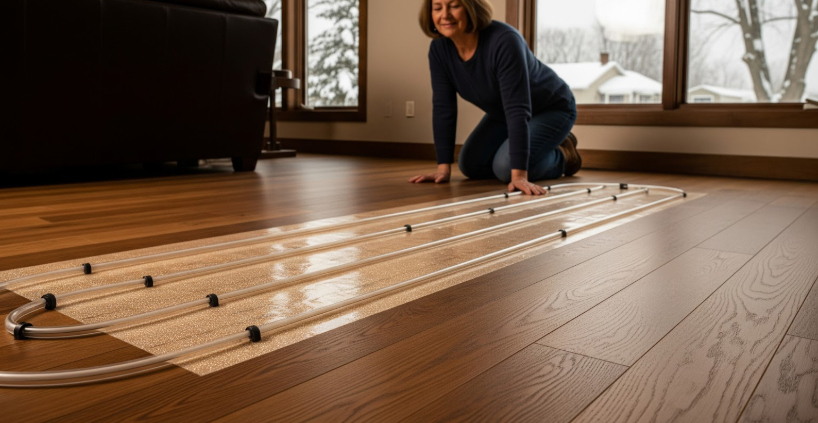
Radiant heating systems warm your home from the ground up, using either electric coils or hydronic (water-based) tubing beneath the floor surface. Instead of blowing hot air, they radiate steady, even warmth that eliminates cold spots and keeps your toes toasty.
For Wisconsin winters, radiant heat is a game-changer—it reduces energy waste, feels comfortable underfoot, and maintains consistent indoor temperatures without drying out the air like traditional forced-air systems do.
When paired with suitable flooring, radiant heat delivers the perfect mix of style, comfort, and performance for year-round living.
Can Hardwood Floors Work with Radiant Heat?
Yes—but only when installed correctly and with the right wood species. Hardwood is a natural material that expands and contracts with temperature and humidity changes. That means not all hardwood types respond well to the gentle warmth of radiant systems.
Engineered hardwood is often the best choice. Its layered construction makes it more dimensionally stable than solid hardwood, allowing it to adapt to heat and humidity fluctuations without warping. Modern engineered planks can still look identical to solid wood while performing better under heated floors.
The key is expert installation and careful acclimation before the flooring goes down—something our professional installers at Sheboygan Flooring and Furniture ensure with every project.
Best Hardwood Species for Radiant Heat
Not all wood species handle radiant systems equally. Some are naturally more stable, meaning they expand and contract less under heat.
Top performers include:
Oak: Durable, versatile, and reliable—especially white oak, which is more moisture-resistant.
Hickory: Strong and attractive, ideal for families needing long-term performance.
Walnut: Adds a touch of luxury while maintaining moderate stability under heat.
Maple: Works well in most conditions but should be carefully installed to avoid gapping.
Avoid exotic hardwoods that are more sensitive to temperature changes, such as Brazilian cherry or teak. These may experience more noticeable movement and require stricter humidity control.
Engineered vs. Solid Hardwood for Heated Floors
When comparing engineered hardwood to solid hardwood, engineered options nearly always come out ahead for radiant systems.
Engineered Hardwood: Designed with cross-layered cores that resist expansion and contraction. Performs best with radiant heating and maintains a flawless finish for years.
Solid Hardwood: Beautiful but more prone to movement when exposed to heat or moisture changes. It can still work if the humidity in your home is tightly controlled year-round.
The beauty of engineered hardwood is that it offers the same aesthetic as solid planks but with far greater resilience—perfect for Wisconsin’s changing temperatures and long heating seasons.
You can explore our curated range of hardwood flooring options ideal for radiant systems, crafted for both beauty and performance.
Installation Best Practices for Hardwood with Radiant Heat
Proper installation determines how well hardwood performs with radiant heat. A few key principles ensure long-term success:
Acclimation: Allow the wood to adjust to room temperature and humidity for several days before installation.
Temperature Gradualness: The heating system should be turned on gradually to avoid shocking the wood.
Floating or Glue-Down Methods: Floating floors offer flexibility, while glue-down installations provide stability—both can work with the right subfloor preparation.
Moisture Barriers: Always include a moisture barrier beneath the floor to protect against condensation or vapor from the heating system.
Professional installers familiar with radiant systems are essential for achieving a beautiful, stable result that stands the test of time.
Managing Humidity and Temperature
Wisconsin’s dry winters can impact wood flooring if humidity drops too low. To prevent gapping or cracking, maintain indoor humidity between 35% and 55%. Using a humidifier during the heating season can help balance the air.
Avoid sudden temperature spikes—radiant heat should rise slowly to prevent stress on the wood. Programmable thermostats are a great solution for controlling temperature changes safely and efficiently.
With proper environmental control, your hardwood floors will stay beautiful and stable through every season.
Benefits of Combining Hardwood and Radiant Heat
Pairing hardwood flooring with radiant heating offers numerous advantages:
Consistent Comfort: Even, efficient warmth from the ground up.
Energy Efficiency: Lower thermostat settings save on heating bills.
Quiet Operation: No blowing air or duct noise—just silent comfort.
Improved Air Quality: No dust or allergens circulating from vents.
Timeless Aesthetics: Keeps your space stylish and warm all year long.
This combination is perfect for open-plan homes, family living rooms, and bedrooms where both comfort and design matter.
Creating Warm, Elegant Spaces in Wisconsin Homes
Combining radiant heat with hardwood flooring delivers the perfect blend of function and beauty for Wisconsin homeowners. You get natural warmth, classic elegance, and a cozy environment even during the coldest months.
If you’re ready to upgrade to heated hardwood floors, visit Sheboygan Flooring and Furniture to explore expert advice, high-quality flooring, and professional installation tailored to Wisconsin’s climate.
Our team is here to guide you through every detail—from product selection to radiant-compatible installation. For personalised support or a free consultation, get in touch with our local experts today and discover how to bring warmth and sophistication to your home this winter.


