


Living in Wisconsin means spending a lot of time indoors — especially during those long winter months. The air quality inside your home, the materials under your feet, and the way your space feels all matter more than you might think. For homeowners in Kohler, Sheboygan, Manitowoc, and nearby communities, sustainability isn’t a trend anymore. It’s a thoughtful lifestyle choice.
If you’re looking to make greener decisions without sacrificing comfort or style, eco-friendly area rugs are a smart place to start. They bring warmth, texture, and personality into your home while supporting healthier indoor air and more responsible sourcing practices.
At Sheboygan Flooring and Furniture, we’ve seen growing interest from families who want beautiful flooring solutions that align with their values. Whether you’re updating a cozy bungalow in Sheboygan Falls or refreshing a modern space in Kohler, sustainable rugs offer practical benefits along with peace of mind.
In this guide, we’ll break down:
What makes an area rug eco-friendly
The best sustainable materials for Wisconsin homes
How eco rugs perform through our four seasons
Certifications that matter
Design ideas that balance sustainability and style
How to choose the right rug for your space
Let’s take a closer look at how you can create a healthier, more environmentally conscious home — one rug at a time.
What Makes an Area Rug Eco-Friendly?
Not all rugs are created equal. When people hear “eco-friendly,” they often think it simply means natural fibers. In reality, sustainability goes deeper than that. It involves materials, manufacturing processes, chemical content, and long-term durability.
Here’s what truly sets an eco-friendly rug apart.
Natural vs. Synthetic Fibers
One of the biggest factors is fiber content. Rugs made from renewable materials like wool, jute, sisal, or organic cotton tend to have a lighter environmental footprint than fully synthetic alternatives.
Wool, for example, is naturally renewable and biodegradable. Jute and sisal come from fast-growing plant fibers. These options support more responsible farming practices while reducing reliance on petroleum-based materials.
That said, some recycled synthetic fibers can also qualify as sustainable, especially when they repurpose post-consumer waste. The key is transparency in sourcing and production.
When evaluating rugs, look for natural fiber construction or clearly labeled recycled materials. It’s not about perfection — it’s about making informed choices.
Low-VOC and Non-Toxic Backings
Indoor air quality matters, especially during Wisconsin winters when windows stay closed for months at a time. Many conventional rugs contain adhesives, dyes, or synthetic backings that release volatile organic compounds (VOCs).
Eco-friendly rugs prioritize low-VOC materials and non-toxic finishes. This can make a noticeable difference for families with kids, pets, or allergy sensitivities.
Cleaner materials contribute to a fresher indoor environment and long-term comfort — something every homeowner can appreciate.
Responsible Manufacturing Practices
True sustainability also includes how the rug is made. Environmentally conscious manufacturers reduce water usage, limit harsh chemicals, and support ethical labor practices.
While you may not see the manufacturing process directly, certifications (which we’ll cover later) provide assurance that the rug meets recognized environmental and social standards.
When you combine renewable fibers, healthier materials, and responsible production, you get a rug that supports both your home and the planet.
Best Eco-Friendly Rug Materials for Wisconsin Homes
Choosing the right material isn’t just about sustainability. It’s also about durability, comfort, and performance in a Midwest climate. Here are some of the best eco-conscious options for local homes.
Wool Rugs
Wool remains one of the most reliable and sustainable rug materials available. It’s naturally renewable, biodegradable, and incredibly durable.
In Wisconsin homes, wool rugs offer practical benefits:
Natural insulation during cold winters
Resilience against heavy foot traffic
Built-in stain resistance from natural lanolin
Wool also maintains its appearance over time, making it a long-lasting investment for living rooms and bedrooms alike.
Jute and Sisal Rugs
If you love texture and a relaxed, organic look, jute and sisal are excellent options. These plant-based fibers grow quickly and require fewer chemical inputs during cultivation.
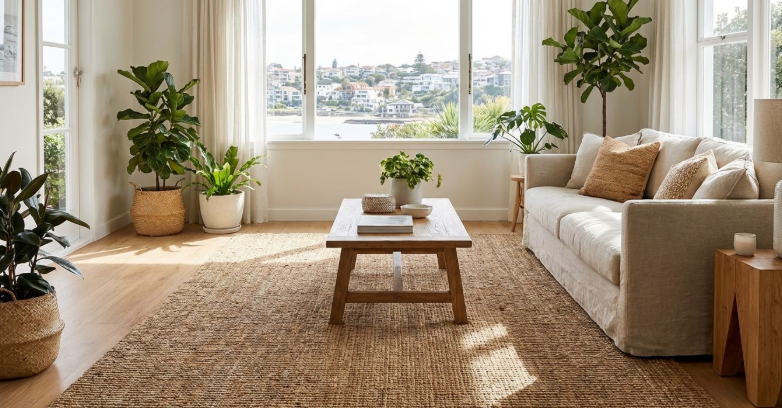
Jute rugs feel softer underfoot, while sisal offers a slightly firmer texture. Both work beautifully in entryways, dining rooms, or layered over hardwood for a modern farmhouse feel.
They’re especially popular in Kohler homes that blend natural materials with clean architectural lines.
Organic Cotton Rugs
For families seeking softness and easy maintenance, organic cotton rugs provide a comfortable solution. Cotton is breathable and versatile, making it ideal for casual spaces.
Organic versions reduce pesticide exposure and chemical processing, creating a healthier option for nurseries, playrooms, and bedrooms.
They’re lightweight and easy to rotate seasonally — perfect for adapting to Wisconsin’s changing weather.
Recycled Fiber Rugs
Some eco-conscious homeowners prefer rugs made from recycled materials, such as repurposed plastics or reclaimed textiles. These rugs help reduce landfill waste while offering surprising durability.
Recycled fiber rugs often perform well in high-traffic areas like mudrooms or entryways, where snow, salt, and moisture are common challenges.
Sustainability doesn’t mean compromising on strength — it means choosing smarter materials.
How Eco-Friendly Rugs Perform Through Wisconsin’s Four Seasons
Living in Sheboygan County means your floors go through a lot each year. From snowy boots to summer humidity, your rug needs to keep up.
Here’s how sustainable rugs hold up season by season.
Winter:
Wool provides natural insulation
Dense fibers trap warmth
Durable weaves handle snow and salt
Spring:
Jute and cotton options dry relatively quickly
Easy-to-clean materials help manage mud
Summer:
Breathable natural fibers prevent trapped heat
Lighter textures create an airy feel
Fall:
Textured rugs catch leaves and debris
Durable construction withstands increased indoor activity
Eco-friendly doesn’t mean delicate. Many sustainable rugs are designed for everyday life — including busy households with kids and pets.
Rotating rugs seasonally can also extend their lifespan and keep your home feeling fresh all year long.
Certifications to Look for When Shopping Sustainable Rugs
When investing in an eco-friendly rug, third-party certifications offer added reassurance.
OEKO-TEX Certification
OEKO-TEX verifies that textiles meet strict standards for harmful substances. Rugs with this certification are tested for chemical emissions, supporting healthier indoor air quality.
For families who spend long winter months indoors, this certification offers meaningful peace of mind.
GoodWeave Certification
GoodWeave focuses on ethical labor practices. It ensures rugs are produced without child labor and under fair working conditions.
Sustainability isn’t only about materials — it’s also about responsible human practices.
FSC Certification
The Forest Stewardship Council (FSC) certifies responsibly sourced natural materials. If your rug includes wood-based fibers or backing components, FSC labeling indicates responsible forestry practices.
These certifications help you make confident decisions rooted in transparency and accountability.
Style Meets Sustainability — Designing with Eco Rugs
Choosing sustainable materials doesn’t mean limiting your design vision. In fact, eco-friendly rugs often bring timeless elegance to a space.
In Wisconsin homes, timeless neutral tones tend to shine. Soft beiges, warm grays, and earthy browns complement hardwood, tile, and open-concept layouts beautifully.
Layering natural fiber rugs over hardwood creates visual interest and protects your floors. In farmhouse-inspired homes, textured jute paired with cozy wool adds depth and warmth.
For inspiration close to home, browse our collection of area rugs designed with local living in mind. You’ll find options that balance sustainability with durability and style.
Modern Kohler interiors often combine clean lines with organic textures, making eco rugs a natural fit. Meanwhile, traditional Manitowoc homes benefit from wool’s classic appeal.
Design and sustainability can absolutely work together — and the results feel both intentional and inviting.
How to Choose the Right Eco-Friendly Rug for Your Home
When selecting a sustainable rug, keep these practical considerations in mind.
Room Type
High-traffic areas like living rooms and entryways benefit from durable fibers like wool or recycled blends. Bedrooms and low-traffic spaces can prioritize softness.
Traffic Level
Busy households with kids or pets may prefer dense weaves that resist wear and are easier to maintain.
Maintenance Needs
Consider how easily the rug can be cleaned. Some natural fibers require spot cleaning, while others allow for more routine maintenance.
Seasonal Flexibility
Lightweight cotton or jute rugs are easier to rotate seasonally. Wool may stay in place year-round due to its insulating qualities.
Professional Guidance
A knowledgeable flooring team can help you evaluate options based on your lifestyle, budget, and design goals.
If you’re ready to explore sustainable options for your home in Sheboygan, Kohler, or beyond, we’re here to help. Reach out today to get in touch and schedule a free in-home estimate.
Eco-friendly living starts with thoughtful choices — and the right rug can make a meaningful difference in both comfort and conscience.


