


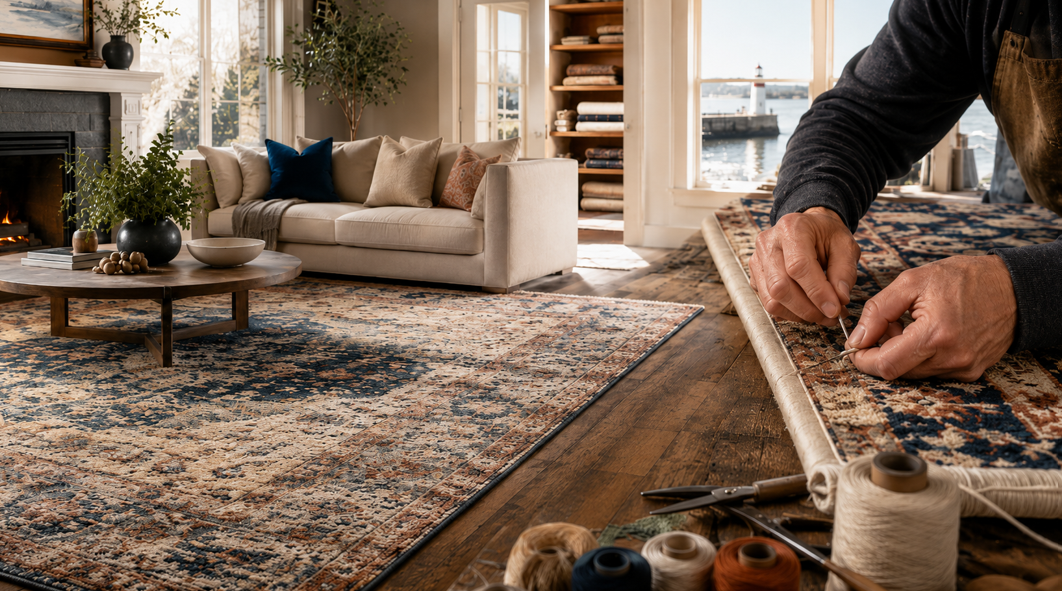
A rug can do more than add color to a room. It can connect a seating area, protect the floor beneath a dining table, soften a bedroom, or give a long hallway a finished look. The challenge is that standard rug sizes do not always match the way a room is shaped or furnished.
That is where custom area rug binding can make a meaningful difference. Instead of settling for a rug that is slightly too small, too wide, or awkwardly proportioned, homeowners can choose suitable carpet and have the edges professionally finished.
At Sheboygan Flooring and Furniture, local homeowners can explore personalized flooring and rug solutions with help from a family-owned team that understands homes in Sheboygan and the surrounding area. Whether the goal is to protect hardwood, define an open-concept room, or add comfort underfoot, local guidance can make the process easier from the first measurement to the final placement.
What Custom Area Rug Binding Means
Custom area rug binding is the process of cutting suitable carpet to a chosen size and finishing the exposed edges so they look polished and are less likely to fray. The result is a practical rug made for a specific room rather than a standard size selected from a shelf.
The project may begin with a carpet remnant or a new piece of carpet chosen for the space. Some remnants are large enough and suitable for custom rugs, while others may not have the right dimensions, backing, or condition. Choosing new carpet provides more control over color, pattern, texture, and size.
How the Process Usually Works
The room and intended rug placement are reviewed.
The customer chooses a suitable carpet.
Final measurements and shape are confirmed.
The carpet is cut to the approved dimensions.
The exposed edges are professionally finished.
The completed rug is checked before use.
Binding creates a clean edge, but it does not change the carpet’s basic performance. The fiber, construction, pile height, backing, and intended use still influence how the rug feels, cleans, and wears.
That is why material selection matters as much as the dimensions. A soft, plush carpet may feel excellent in a bedroom, while a lower-profile option may be more practical in a dining room, hallway, or entry.
Why Standard Rug Sizes Can Fall Short
Ready-made rugs work well in many rooms, but homes are not designed around one set of dimensions. Furniture arrangements, wall openings, vents, door swings, and traffic paths all affect the size that feels right.
A rug that is too small can make a living room look disconnected. The coffee table may sit on the rug while the sofa and chairs seem to float around it. In a dining room, a rug may look large enough until a chair is pulled out and its back legs catch on the edge.
A rug that is too large can block a vent, interfere with a doorway, or leave too little visible flooring. Custom sizing lets the rug respond to the space.
Custom binding can be especially useful in:
Long or narrow hallways
Open-concept living spaces
Dining areas with large tables
Bedrooms with unusual furniture layouts
Home offices
Entryways
Sitting zones within larger rooms
The goal is not to cover every inch of floor. A well-sized rug supports the furniture arrangement, creates visual balance, and leaves enough flooring visible to frame the space.
Why a Local Binding Service Makes a Difference
Ordering a rug online may seem simple, but a screen cannot show exactly how a texture feels, how a color changes throughout the day, or whether a carpet construction is a sensible choice for the room.
A local service gives homeowners practical help before the carpet is cut. That support can prevent measurement problems and guide choices based on how the room is actually used.
More Accurate Sizing
Measuring only the empty floor area can lead to a rug that does not work once furniture and movement are considered. A flooring professional can help homeowners think through questions such as:
Will the front legs of the sofa rest on the rug?
How far do dining chairs extend when pulled out?
Will nearby doors clear the rug surface?
How much flooring will remain visible?
Where do people naturally walk through the room?
Does a floor vent need to remain open?
The right size connects furniture without crowding the room and gives dining chairs enough space to move comfortably. These details have a big effect on how the finished room looks and functions.
A Better View of Color and Texture
Carpet color can shift depending on daylight, wall color, furniture, and the direction of the pile. A warm neutral may look creamy in one room and slightly gray in another. Texture is also hard to assess online.
Seeing and touching the material in person helps customers compare softness, density, pattern, and scale. Samples can be viewed beside existing flooring, paint, or upholstery before the final choice is made.
Personalized Recommendations
A home with pets and children may need a different rug construction than a quiet guest room. A hallway has different demands from a bedroom.
Local guidance allows for a useful conversation about traffic, pets, cleaning, comfort, flooring, style, and budget. That produces a more informed recommendation than choosing by appearance alone.
Easier Communication
Custom projects involve several important decisions, including measurements, carpet direction, edge finish, and pickup or delivery arrangements. Working with a nearby business gives customers a clear point of contact for questions, care guidance, and future flooring needs.
Where Custom Area Rugs Work Especially Well
A custom-bound rug can help wherever standard dimensions create an awkward fit. Homeowners can also browse area rugs for inspiration before deciding whether a ready-made design or a custom option better suits the room.
Living Rooms and Open-Concept Spaces
Open layouts feel spacious, but they often need visual structure. A rug can define the living area without adding walls or blocking sightlines.
A custom rug can connect the sofa, chairs, and coffee table while keeping surrounding flooring visible. In a larger room, it can separate seating from dining or walking zones.
Dining Rooms
Dining room rugs need to work when the table is in use, not only when the chairs are tucked in. A rug that ends too close to the chair legs can create an uneven surface when people sit down or stand up.
Custom sizing allows the rug to extend far enough beyond the table for smoother chair movement. It also gives homeowners more control over the shape, which may help with round tables, long rectangular tables, or dining areas with limited clearance.
Bedrooms
A rug can add warmth around a bed, especially over hardwood, laminate, luxury vinyl, or tile. Common layouts include one large rug beneath the bed or two narrow rugs along its sides.
Custom binding makes it easier to coordinate the rug with the bed, nightstands, and available walking space.
Hallways and Entryways
Hallways often have dimensions that do not match standard runners. A rug may need to fit between doorways, avoid vents, and leave a consistent border of visible flooring.
Entryways need extra consideration because of moisture, dirt, and frequent traffic. A lower-profile carpet may be more practical than a deep plush option, and door clearance needs to be checked.
Home Offices
A custom rug can soften sound, protect the floor, and visually define a workspace. The chair type matters, however. Rolling office chairs usually move more easily over a firm, lower-profile surface than over a thick pile.
The rug also needs enough area to support normal chair movement without repeatedly catching at an edge.
Choosing Carpet That Fits the Household
The best carpet for a custom rug is not simply the one that looks attractive in the showroom. It needs to match the room’s traffic, furniture, cleaning routine, and comfort goals.
Match the Construction to Traffic
A guest bedroom and a busy family room do not place the same demands on a rug. In active areas, a denser or more resilient carpet may be better suited to repeated foot traffic.
Hallways, entries, and living rooms often benefit from materials that hold their appearance and are practical to maintain. Bedrooms and quiet sitting areas may allow for softer, deeper textures.
Plan for Pets and Children
Pets and children influence flooring decisions, and rugs are no exception. Useful factors include cleanability, stain resistance, color variation, pattern, and pile height.
No carpet is completely pet-proof or stain-proof. Still, some colors and textures are more forgiving between cleanings. A multicolored or subtly patterned carpet may hide everyday debris better than a very light, solid surface. Lower-profile options may also be easier to vacuum in active households.
Coordinate With the Existing Floor
A rug does not need to match the floor underneath it. Contrast often creates a stronger design.
A warm neutral rug can soften dark hardwood. Texture can add comfort over tile. A subtle pattern can bring movement to plain luxury vinyl. The main concern is undertone. A cool gray rug may feel disconnected from a floor with strong golden or red tones, even when both look attractive separately.
Viewing a sample in the room makes it easier to judge the relationship under natural and evening light.
Select a Practical Pile Height
Pile height affects comfort, maintenance, furniture stability, and door clearance. Plush carpet can feel inviting in a bedroom or sitting area, while a lower profile may work better beneath dining chairs, near doors, or in a home office.
Consider a Rug Pad
A suitable rug pad may add cushioning, reduce movement, and help protect the floor. The correct pad depends on the rug, room, and flooring type.
Choose a pad approved for the finished floor. Some hardwood, laminate, vinyl, and tile manufacturers provide compatibility guidance. A flooring professional can help identify compatible materials.
Design Details That Create a Finished Look
A custom rug feels most successful when it looks planned for the room, not like a leftover piece of carpet placed wherever it happened to fit.
Choose the Right Shape
Rectangular rugs suit many rooms, but square, round, and runner shapes can work well too. A round rug can complement a circular dining table or soften a room filled with straight lines. Runners suit hallways, narrow transitions, and the sides of a bed.
Unusual shapes require careful planning. Carpet construction and the selected edge finish may affect which shapes can be cut and finished successfully.
Decide How Much Floor to Show
Visible flooring acts like a frame. Too little can make the rug feel crowded, while too much may make it appear undersized.
There is no single border measurement for every home. In living rooms, use the main furniture pieces as visual guides. In bedrooms, align the rug with the bed. In hallways, an even strip of flooring on both sides usually looks balanced.
Coordinate Color With the Whole Room
Consider the rug alongside walls, furniture, window treatments, cabinets, and permanent fixtures. It can blend with the room or add contrast.
Neutral does not need to mean plain. Texture, subtle pattern, and tonal variation can add depth. Reviewing samples at different times of day is useful because the room’s light can shift significantly.
Treat the Edge as a Design Choice
The edge finish can blend into the carpet or create a noticeable border. A coordinating finish feels quiet and seamless, while contrast can give the rug a more tailored appearance.
Available finishes depend on the carpet and service, so it helps to confirm suitable options before approving the project.
What to Expect During the Custom Rug Process
A custom rug project feels straightforward when the key details are handled in the right order.
Start With the Room
Identify exactly where the rug will sit and how the furniture will relate to it. Take photos and note doors, vents, walkways, and nearby transitions.
Helpful items to bring to the showroom include:
Room measurements
Furniture dimensions
Photos of the space
Paint or fabric swatches
A flooring sample, when available
Inspiration photos
Discuss Daily Use
Explain how the space functions. Is it a formal room or the busiest area in the house? Will pets use the rug? Does a rolling chair need to move across it? Will people enter directly from outdoors?
These details help guide construction, color, pattern, and pile height.
Confirm Every Measurement
Measurements need to be reviewed before the carpet is cut. Custom products may have different return or alteration conditions than standard items, so confirm the finished length, width, shape, and pattern direction in advance.
Review the Final Details
Before work begins, confirm:
Finished dimensions
Rug shape
Carpet direction
Edge finish
Expected completion timing
Rug pad needs
Pickup or delivery arrangements
Care recommendations
Caring for a Custom-Bound Rug
Routine care helps a custom rug maintain its appearance.
Vacuum according to the carpet manufacturer’s guidance, using a setting that suits the pile. An overly aggressive brush or incorrect height setting may pull at fibers or place unnecessary wear on the bound edge.
Blot spills promptly with a clean cloth rather than rubbing them into the carpet. Use products recommended for the specific fiber, and test any unfamiliar cleaner in a hidden area first.
When practical, rotate the rug to distribute foot traffic and sunlight exposure more evenly. This can be especially helpful in living and dining rooms where the same paths are used each day.
Check the bound edges from time to time, particularly in active spaces. If a section begins to loosen, ask a flooring professional whether repair or rebinding is appropriate before the damage spreads.
A Better Fit Starts With Local Guidance
Custom area rug binding gives Sheboygan homeowners more control over size, material, comfort, and style. It can solve common problems that standard rug dimensions leave behind, from awkward furniture placement to hallways that never seem to match a ready-made runner.
The value of a local service goes beyond the finished edge. Customers can compare materials in person, discuss how the room is used, review measurements, and choose a rug that works with the flooring already in the home.
A thoughtfully sized rug can protect a floor, soften a room, define a seating area, and make the entire space feel complete. With the right carpet and professional finishing, it becomes a practical part of the home rather than a temporary decorating fix.
Ready to explore a custom rug for your living room, hallway, bedroom, dining area, or workspace? Get in touch with the local team to discuss your space, available materials, and next steps.


